.svg)
Music Makes You Successful
Children who study music develop stronger executive function, self-discipline, and social confidence than their peers, the exact qualities that define successful leaders.
- Hallam, International Journal of Music Education
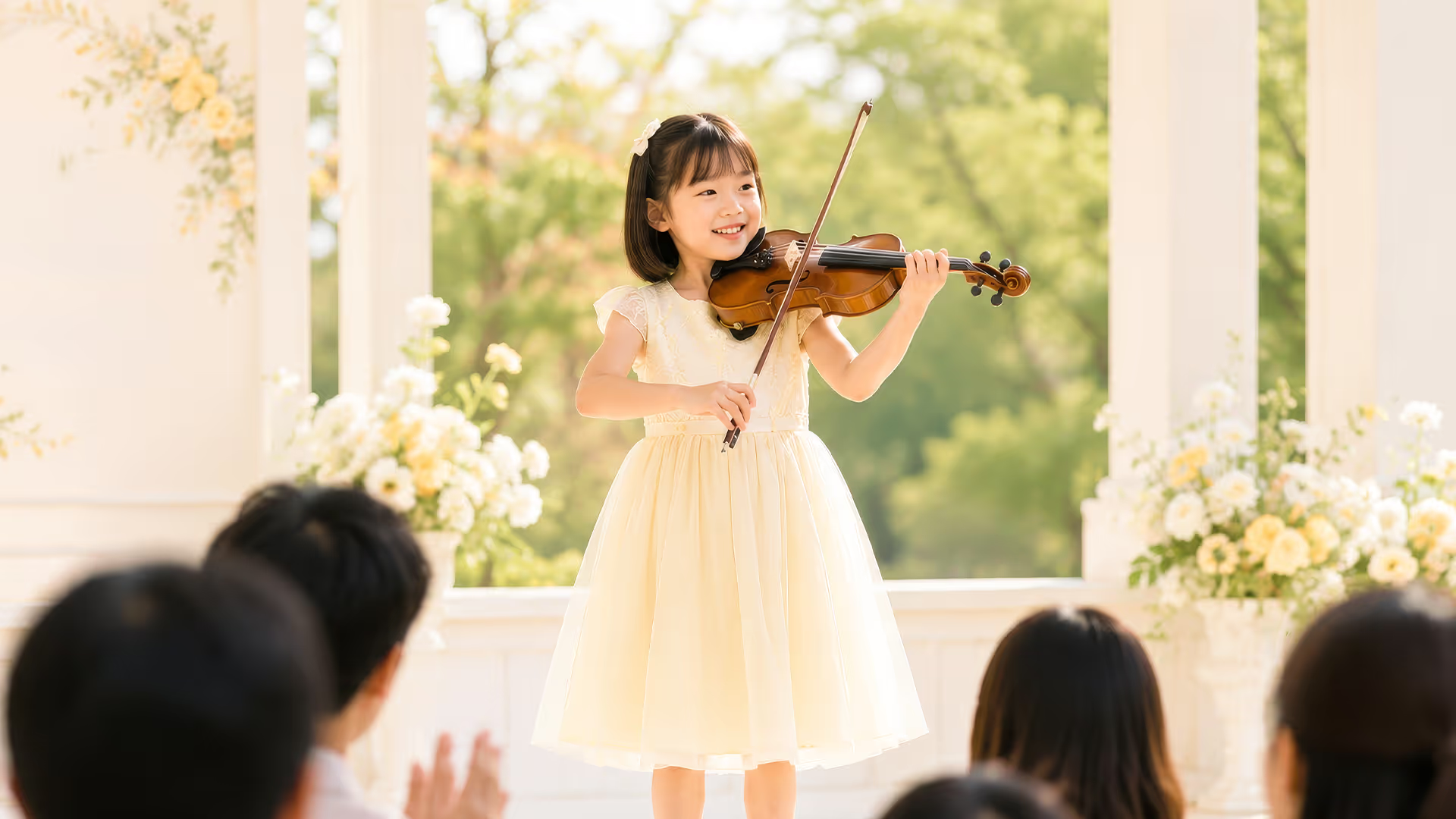
Improve Learning & Academic Performance
Music strengthens the underlying skills children use to read, remember, reason, and solve problems, helping support stronger learning across school and everyday life.
Music education does not just develop musical ability. It supports many of the same core learning skills that children rely on in the classroom, including language processing, working memory, reasoning, attention, and problem-solving. Over time, these benefits can extend beyond the lesson itself and contribute to stronger academic development.
Research has linked music training with better reading and language skills, stronger working memory, gains in reasoning and IQ measures, and improved focus and executive function. One randomized study found that children who received music lessons showed greater increases in full-scale IQ than control groups, while a large British Columbia study found that participation and achievement in music were positively associated with achievement in core Grade 12 academic subjects.

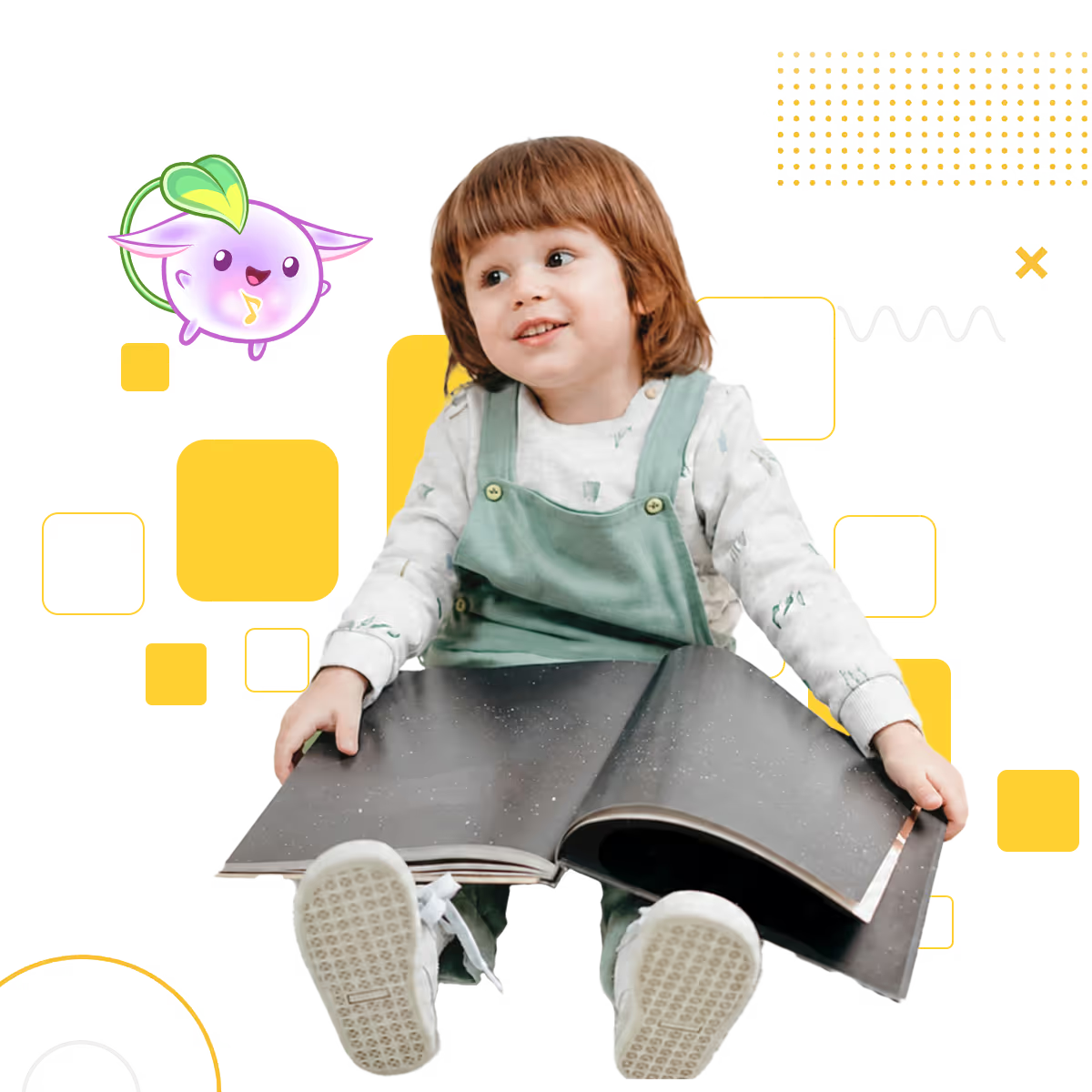
Better Reading and Language Skills
By strengthening listening, sound discrimination, and pattern recognition, music can help support the foundations children use for reading, speech, and communication.
Reading and language development rely on more than vocabulary alone. Children also need to hear subtle differences in sound, recognise timing and rhythm, and process patterns accurately. These are many of the same underlying skills trained through music.
Research has shown that music skills are significantly related to phonological awareness and early reading development. In one study of preschool children, music perception skills contributed unique variance in predicting reading ability, even after accounting for phonological awareness and other cognitive abilities. A longitudinal study also found that children receiving music instruction maintained their age-normed reading performance and improved in rapid naming over time.
Improved Working Memory
Music challenges children to hold information in mind, work with it, and respond in real time, helping strengthen one of the most important foundations for learning.
Working memory plays a major role in how children learn. It helps them hold instructions in mind, connect ideas, follow multi-step tasks, and stay engaged while solving problems. Music naturally exercises this skill, because students are constantly remembering notes, rhythms, patterns, and timing while listening and responding at the same time.
Over time, this kind of training can strengthen broader cognitive and executive function skills. Children who learn music are often required to hold multiple ideas in mind at once, stay mentally flexible, and coordinate attention across different tasks, all of which support stronger learning and classroom performance.
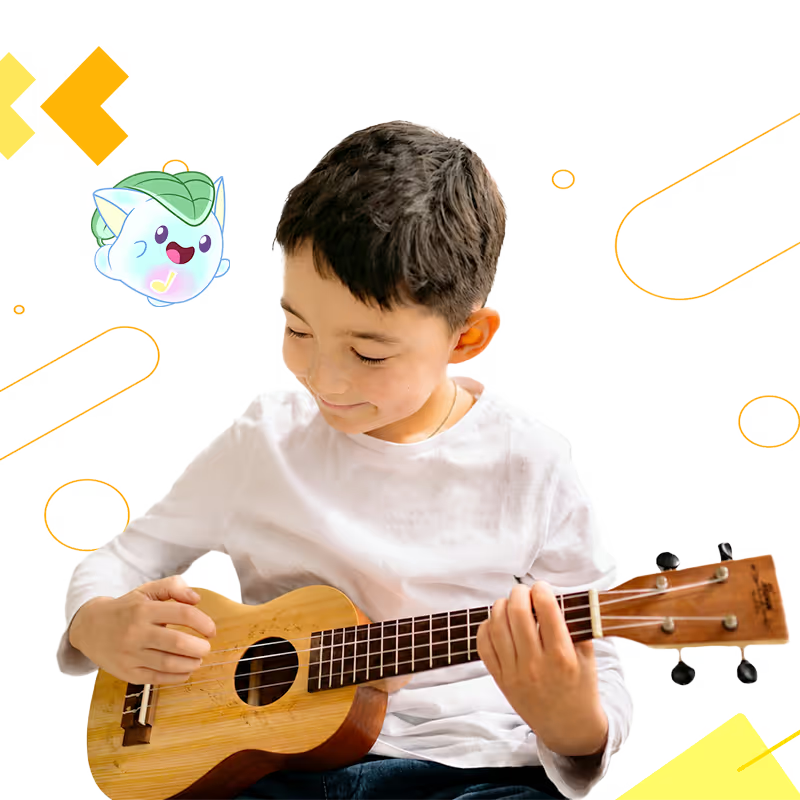
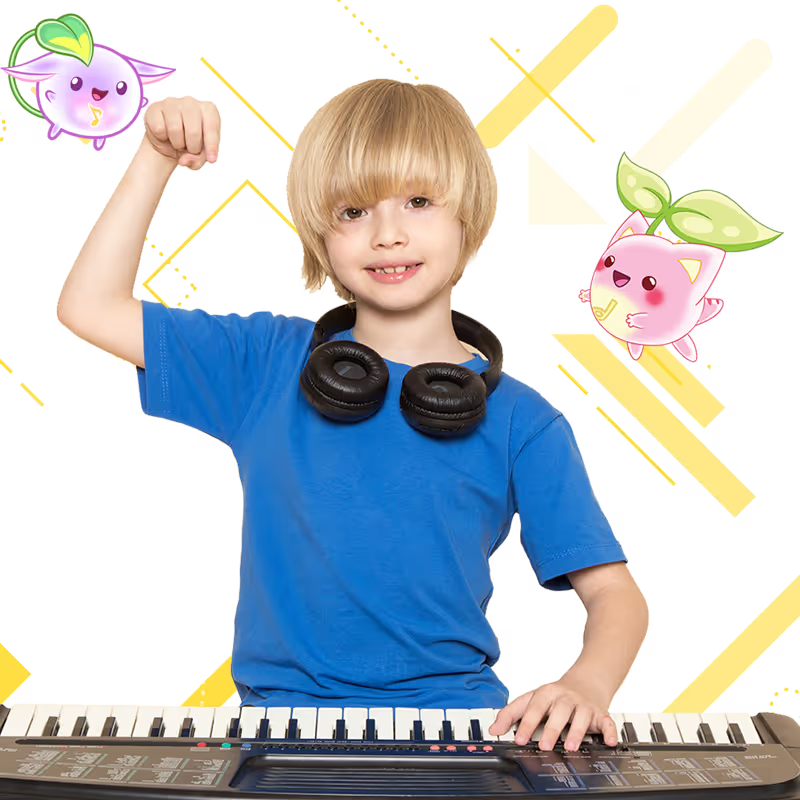
Stronger Focus and Problem-Solving
Music helps children build the attention, mental flexibility, and control they need to stay engaged and work through challenges more effectively.
Focus and problem-solving are built through repeated practice in paying attention, filtering distractions, making adjustments, and working through mistakes. Music lessons develop these habits naturally. Students must listen carefully, follow structure, respond in real time, and keep going even when something is difficult.
Over time, this kind of training strengthens executive function — the set of mental skills that supports focus, decision-making, self-control, and goal-directed thinking. Research from USC’s Brain and Creativity Institute found that children with music training showed greater engagement of the brain’s cognitive control network during a Stroop task, a classic measure related to attention and executive control.
Related Articles
Effects of music training in executive function performance in children: A systematic review
A 2022 Frontiers in Psychology review found music training may improve children’s executive function, especially inhibitory control, plus working memory and flexibility.

Increased engagement of the cognitive control network associated with music training in children during an fMRI Stroop task
Research shows music training strengthens executive function. USC found trained children showed greater cognitive control network activation during a Stroop task.
Does music training enhance working memory performance? Findings from a quasi-experimental longitudinal study
A longitudinal study found children in instrumental music training outperformed a science group on working memory measures after 18 months.
Relations among musical skills, phonological processing, and early reading ability in preschool children
Research shows music skills are linked to phonological awareness and early reading. Studies found music predicts reading ability and improves naming speed.
Music Lessons Enhance IQ
Research has linked music training with better reading, language, working memory, reasoning, IQ, focus and academic achievement in school studies. Overall outcomes.
From Our Families
Hear it straight from our parents and students!